Center Certification & Testing International
With the rapid development of wireless technology, Bluetooth headsets have become a must-have item for people\'s daily commuting, office work and entertainment. Relying on convenience and practicality, the market demand continues to rise. However, for Bluetooth headset manufacturers and sellers planning to promote products to the European market, compliance is the primary prerequisite - as a mandatory EU safety conformity mark, CE certification is the \"passport\" for products to open the door to the EU market, and its importance is self-evident. Today, we will elaborate on the necessity and complete process of applying for CE certification for Bluetooth headsets to help enterprises go overseas smoothly.
With the rapid development of the new energy industry, polymer batteries are widely used in mobile phones, laptops, smart wearables, new energy vehicles and other fields by virtue of their advantages such as light and thin shape, high energy density and excellent safety performance. For enterprises planning to export polymer batteries to the South Korean market, KC certification is an insurmountable compliance threshold, and also a core prerequisite for products to smoothly enter the South Korean market and gain consumer recognition.
CE-RoHS certification is a mandatory compliance threshold for tablets to enter the EU market. Composed of CE (Conformité Européenne) certification and RoHS (Restriction of Hazardous Substances) directive, it is a dual access standard for safety and environmental protection set by the EU for consumer electronic products, and also an essential qualification for products to be legally sold and circulated in the 27 EU member states and the European Economic Area.
SRRC Certification (State Radio Regulation Committee Certification) refers to the National Radio Transmission Equipment Type Approval Certification, a mandatory certification system implemented by China for wireless transmission equipment. Its core purpose is to regulate the use of radio spectrum, avoid electromagnetic interference between equipment, and safeguard public communication order. As a common device that transmits audio signals via radio waves, wireless microphones have parameters such as transmitting frequency and power that directly affect the rational use of spectrum resources. Therefore, they are explicitly included in the SRRC certification catalog, and uncertified products are strictly prohibited from being produced, sold or put into use.
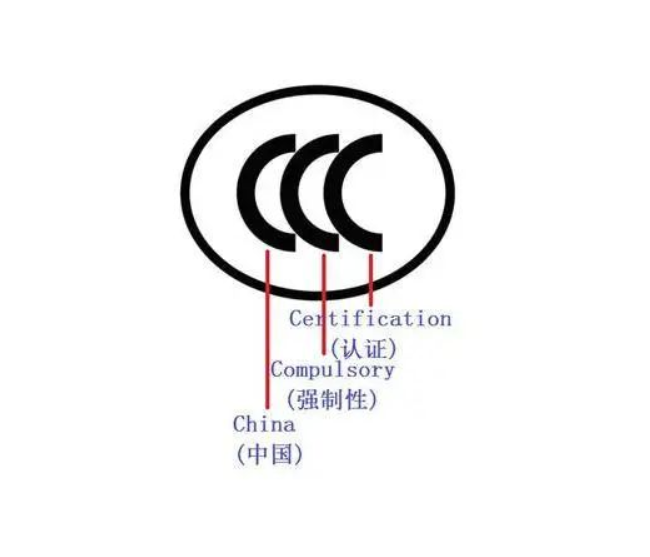
The China Compulsory Certification (CCC) is a mandatory product certification system in China, serving as the statutory access credential for electronic and electrical products to enter the domestic market. As a commonly used office electronic device integrating printing, copying, scanning and other functions, all-in-one machines are explicitly included in the CCC certification catalog. Completing compliant certification is the core prerequisite for the legal production and sales of such products.
With the advantages of lightness, flexibility and high energy density, polymer batteries are widely used in consumer electronics, smart wearables, portable devices and other fields. Their cross-border transportation and market circulation are inseparable from the compliance support of UN38.3 certification. As a special safety testing standard formulated by the United Nations for lithium batteries, UN38.3 certification is the core access certificate for polymer batteries to enter the international air, sea and land transportation systems, and also a key threshold to ensure the safety of the whole transportation process.
jointly implemented by Australia and New Zealand, and also a core access certificate for wireless microphones to enter the markets of the two countries. This certification integrates electrical safety, electromagnetic compatibility (EMC) and radio frequency compliance requirements, replacing the previous scattered certification system in the region, and has become an important standard for judging whether audio radio frequency equipment can be legally circulated.
For toy remote control car products planning to enter the Australian and New Zealand markets, RCM certification is not an optional additional qualification, but a mandatory access threshold for entering the local markets. RCM certification integrates multiple core requirements such as electrical safety and electromagnetic compatibility, covering categories such as electric toys and small electric appliances. Toy remote control cars are naturally included in the scope of certification supervision due to their built-in motors, circuit boards and charging modules.
Learn the latest exciting content
Tik Tok